Global Flavors Japanese Teriyaki Salmon
Highlighted under: International Table Stories
I absolutely love preparing Japanese Teriyaki Salmon at home because it brings an incredible burst of flavors right to my kitchen. The perfect balance of sweet and savory from the teriyaki glaze is simply irresistible. In just under 30 minutes, I can create a dish that not only looks beautiful but also tastes like a restaurant-quality meal. Pair it with steamed rice and fresh vegetables for a complete dinner that never fails to impress.
When I first stumbled upon the recipe for teriyaki salmon, I was intrigued by how simple it was to craft a traditionally Japanese dish in my own kitchen. The secret lies in that rich teriyaki sauce, and I experimented with various ingredients to find that perfect balance of sweetness and umami. I finally settled on mirin, soy sauce, and a touch of honey, and trust me, this glaze is what makes the dish sing!
Every time I prepare this dish, it transforms my dining table into an Asian-inspired haven. I love to showcase it during family gatherings, and the way the salmon fillets caramelize under the heat while absorbing those delicious flavors is a sight to behold! Serve it with a sprinkle of sesame seeds and finely chopped green onions for a stunning finish.
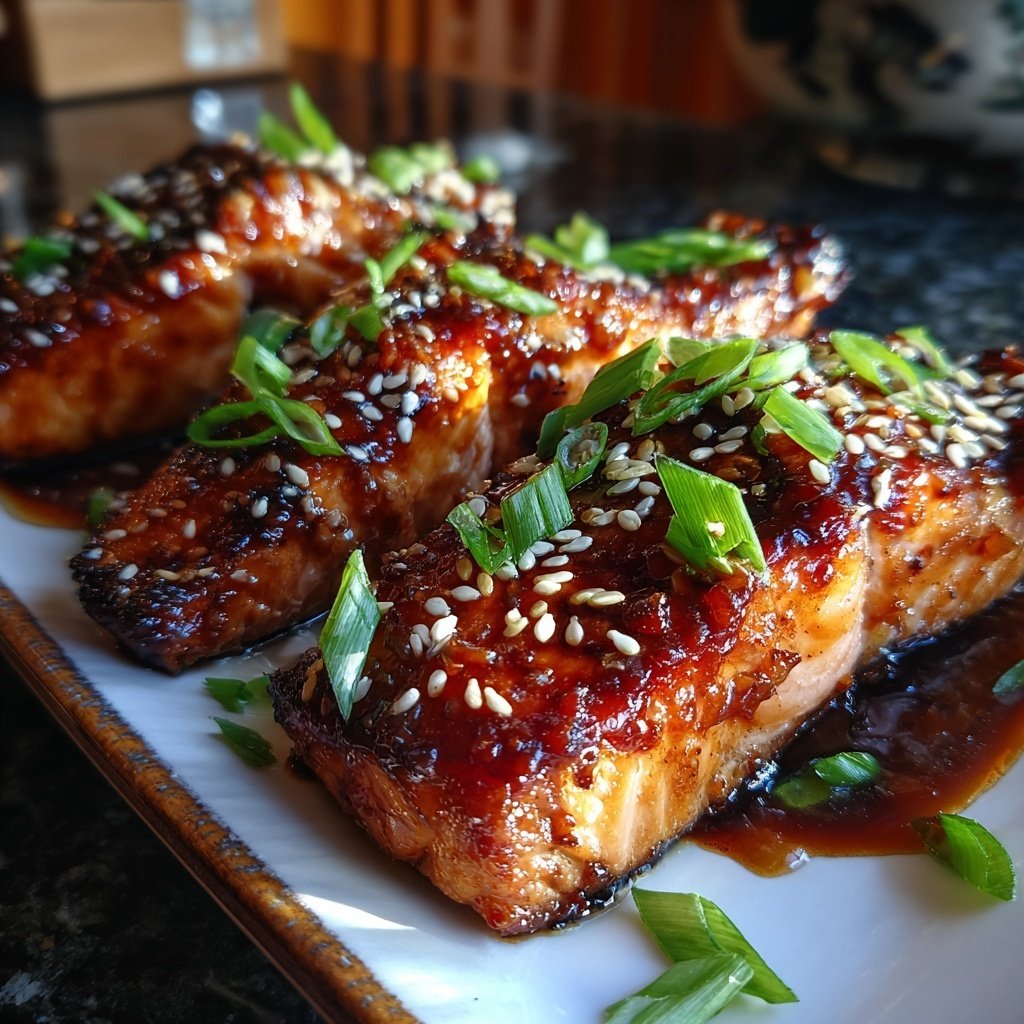
Why You'll Love This Recipe
- Savory teriyaki glaze with a perfect hint of sweetness
- Quick and easy preparation that fits into any weeknight dinner
- Healthy salmon filled with omega-3 fatty acids
Understanding the Ingredients
The key to a flavorful teriyaki glaze lies in the balance of soy sauce, mirin, and honey. Soy sauce provides the umami depth, mirin adds a touch of sweetness and depth, while honey enhances the caramelization during cooking. If you're looking for a lower-sodium option, you can use low-sodium soy sauce without compromising flavor. The addition of fresh minced garlic and ginger brightens the glaze, making it aromatic and delicious.
When selecting salmon fillets, look for those with vibrant color and clear eyes if buying whole. Fresh salmon has a slightly firm texture and should smell clean, not fishy. For a twist, you can substitute salmon with other fish varieties like tuna or even chicken thighs, adjusting the cooking time to ensure everything is thoroughly cooked.
Marinating and Cooking Tips
Marinating is crucial as it allows the salmon to soak up the flavors of the sauce. For best results, aim for at least 15 minutes at room temperature or up to 2 hours in the refrigerator. However, avoid marinating for too long as the acidity can start breaking down the proteins, resulting in a mushy texture. Remember, the longer you marinate, the more intense the flavor, but 30 to 45 minutes is often the sweet spot.
When cooking the salmon, maintaining the right heat is key. Start on medium-high to sear the skin, allowing it to crisp for about 4-5 minutes. After flipping, lower the heat to medium to prevent burning while allowing the marinade to bubble and become a glaze. Look for the salmon to turn opaque and flake easily, typically around 8-10 minutes total cooking time, depending on the thickness of the fillet.
Ingredients
Teriyaki Salmon Ingredients
- 4 salmon fillets
- 1/4 cup soy sauce
- 2 tablespoons mirin
- 2 tablespoons honey
- 1 teaspoon minced garlic
- 1 teaspoon minced ginger
- 1 tablespoon vegetable oil
- Sesame seeds for garnish
- Chopped green onions for garnish
Instructions
Prepare the Marinade
In a bowl, whisk together soy sauce, mirin, honey, minced garlic, and minced ginger until combined.
Marinate the Salmon
Place the salmon fillets in the marinade, cover, and let them sit for at least 15 minutes.
Cook the Salmon
In a skillet, heat vegetable oil over medium-high heat. Add the marinated salmon, skin-side down, and cook for 4-5 minutes.
Glaze the Salmon
Flip the salmon and pour the remaining marinade over the fillets. Cook for another 4-5 minutes until the salmon is cooked through and flakes easily with a fork.
Serve
Remove the salmon from the skillet, garnish with sesame seeds and chopped green onions, and serve with rice and vegetables.
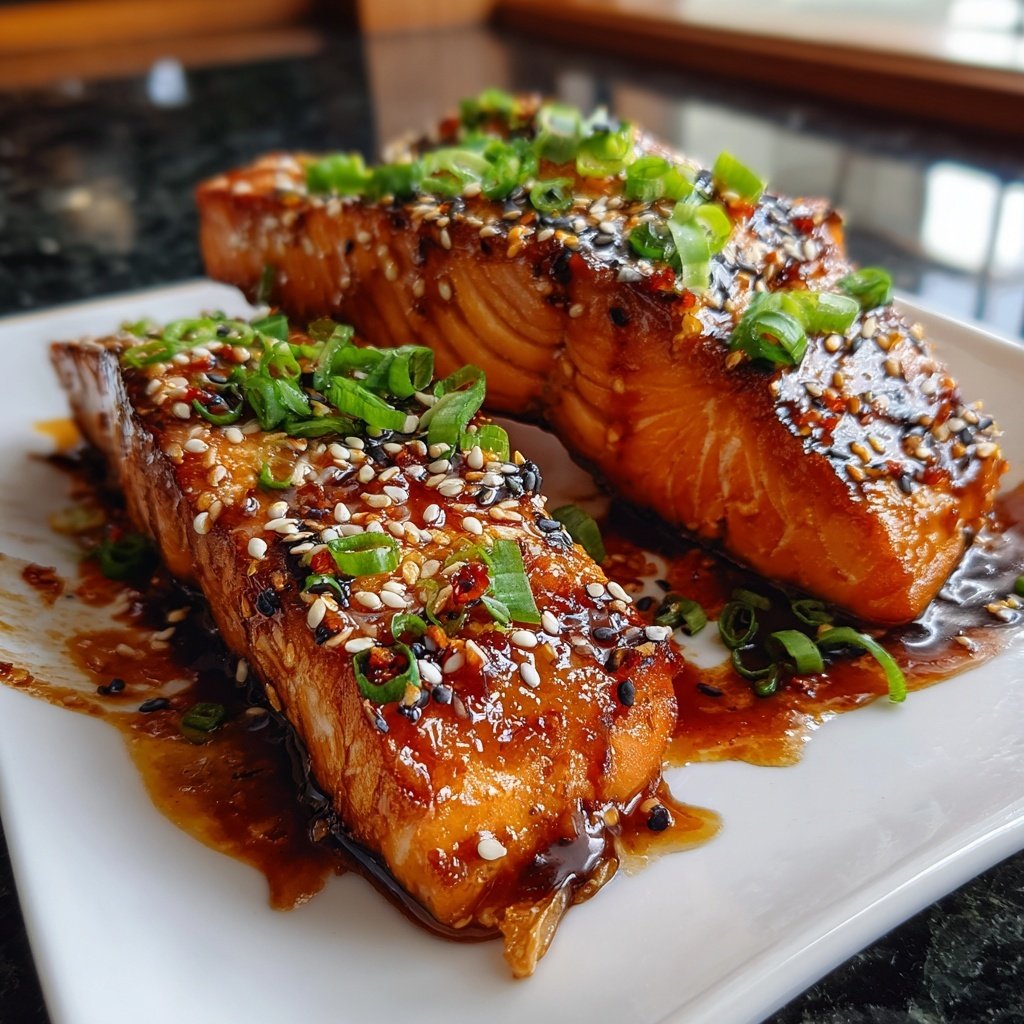
Pro Tips
- For an extra layer of flavor, grill the salmon instead of frying it for a smoky char.
Serving and Pairing Ideas
To create a striking presentation, serve the glazed salmon atop a bed of fluffy white rice, drizzled with a bit of the remaining marinade for extra flavor. Adding stir-fried seasonal vegetables like bok choy, bell peppers, or snap peas can elevate the dish with color and crunch, creating a balanced meal packed with nutrients. For a splash of color, garnish with a sprinkle of sesame seeds and sliced green onions.
For an added kick, consider incorporating a side of pickled ginger or a spicy sesame dressing. I love offering a small bowl of extra teriyaki sauce on the side for those who enjoy a more intense flavor. This dish also pairs wonderfully with a light salad or a miso soup as starters.
Storage and Freezing Tips
Leftover teriyaki salmon can be stored in an airtight container for up to 3 days in the refrigerator. To reheat, gently warm it in a skillet over low heat to preserve the texture, ensuring it doesn’t dry out. Never microwave salmon, as this can cause it to become rubbery. If you wish to enjoy it cold, flake it into salads or grain bowls for a refreshing meal.
For longer storage, cooked salmon can be frozen for up to 3 months. Wrap it tightly in plastic wrap and place it in a freezer-safe bag. When ready to enjoy, thaw it overnight in the refrigerator and reheat gently. Although freezing alters the texture slightly, using it in sauces or soups can mask any changes, allowing you to make use of those delicious leftovers.
Questions About Recipes
→ Can I use other types of fish?
Yes! This marinade works great with other fish like trout or halibut.
→ Is teriyaki sauce unhealthy?
While it's sweet, teriyaki sauce can be part of a balanced diet when used in moderation.
→ Can I prepare the marinade in advance?
Absolutely! You can make the marinade a day ahead and store it in the fridge.
→ What can I serve with teriyaki salmon?
Steamed rice, sautéed vegetables, or a fresh salad pair wonderfully with this dish.
Global Flavors Japanese Teriyaki Salmon
Created by: Lila Morgan
Recipe Type: International Table Stories
Skill Level: Intermediate
Final Quantity: Serves 4
What You'll Need
Teriyaki Salmon Ingredients
- 4 salmon fillets
- 1/4 cup soy sauce
- 2 tablespoons mirin
- 2 tablespoons honey
- 1 teaspoon minced garlic
- 1 teaspoon minced ginger
- 1 tablespoon vegetable oil
- Sesame seeds for garnish
- Chopped green onions for garnish
How-To Steps
In a bowl, whisk together soy sauce, mirin, honey, minced garlic, and minced ginger until combined.
Place the salmon fillets in the marinade, cover, and let them sit for at least 15 minutes.
In a skillet, heat vegetable oil over medium-high heat. Add the marinated salmon, skin-side down, and cook for 4-5 minutes.
Flip the salmon and pour the remaining marinade over the fillets. Cook for another 4-5 minutes until the salmon is cooked through and flakes easily with a fork.
Remove the salmon from the skillet, garnish with sesame seeds and chopped green onions, and serve with rice and vegetables.
Extra Tips
- For an extra layer of flavor, grill the salmon instead of frying it for a smoky char.
Nutritional Breakdown (Per Serving)
- Calories: 350 kcal
- Total Fat: 20g
- Saturated Fat: 3g
- Cholesterol: 62mg
- Sodium: 600mg
- Total Carbohydrates: 10g
- Dietary Fiber: 1g
- Sugars: 8g
- Protein: 30g